Depending on what you would like to have on your windows, the hardware – meaning curtain rods, rails and blind mechanisms, as well as pelmet shelves (to which the rails and mechanisms can be attached) and all the different operating mechanisms – chains, hooks, rods and electrical motors. Please, before you choose the hardware/curtain fabric, consult with me. Not only should the hardware fit visually but it also needs to have the correct size and be able to bear the weight which can be considerable. Ideally I would also be present when your fitter installs it. I’ll have to come anyway – because I will have to measure the final lengths which depend on the position of the hardware, and that will determine the final estimate. I have trade accounts with reputable suppliers and can advise.
Fabric tips for Roman Blinds
Roman blinds are enormously popular. They look smart, do not use a lot of fabric (and are therefore cheaper to make compared to curtains), can be made in ‘standard’, ‘waterfall’ – sometimes called ‘cascade’ or with a border or other embellishments. Depending on your window furniture they can be hung inside or outside the recess. It’s possible to line and interline them, protecting you against the cold. Caution, though: the effect depends on the fabrics used. If the face fabric has a tight weave and is interlined with a special product, you will have crisp pleats. A loose weave such as linen or a linen imitation will show relaxed folds. I do not recommend blackout lining for Roman blinds. This is because it needs to be ‘stab-stitched’ (tiny little stitches that connect the lining to the main fabric) and this will make a visible hole in the otherwise lightproof lining. Those tiny holes cannot be avoided but don’t show up anywhere near as noticeably if using a cotton lining. If you interline (put an insulating layer between the main fabric and the lining) most light will be blocked, but there will be extra bulk when the blind is drawn up: is there enough space in the window recess? If the blind is outside the recess and is quite long, the mechanism might have to move forward to accommodate the bulk of the folds. I’m happy to advise.
Pattern Drift
If you were able to bag a bargain by buying a whole roll of fabric at a discount, you might want to think about why it was cheap. Especially designer fabrics (but any really) may not be printed correctly. Pattern drift is when the design on the fabric does not repeat at the correct intervals. As a result, lengths of fabric that are joined together can not be pattern matched. Other faults include ‘bobbles’ in the weave and selvedges that do not allow for matching the patterns because they are too narrow. I would normally send those faulty fabrics back to where they came from.
Here’s an example of pattern drift. You’ll notice it immediately if you look at the yellow tulips. They are supposed to be at the same level in the fabric.

Sewing machines
There are three main types: domestic, industrial and overlocker. I have one of each. Domestic ones can be adapted with a walking foot: without it, the feed dogs that move the fabric along can only catch the bottom layer, but with this attachment, both layers are moved at the same rate. This is useful to prevent puckering and great for joining lots of layers. Industrial machines sew really fast but can normally only do straight stitches. They have an oil sump below them and drive like a car! Overlockers result in a stitch that you can see on the inside of T-shirts. They sew, neaten and cut excess fabric off all at the same time. You have to thread them with tweezers. All of them get serviced by Harbsew in Acton. An excellent man.


Double piping
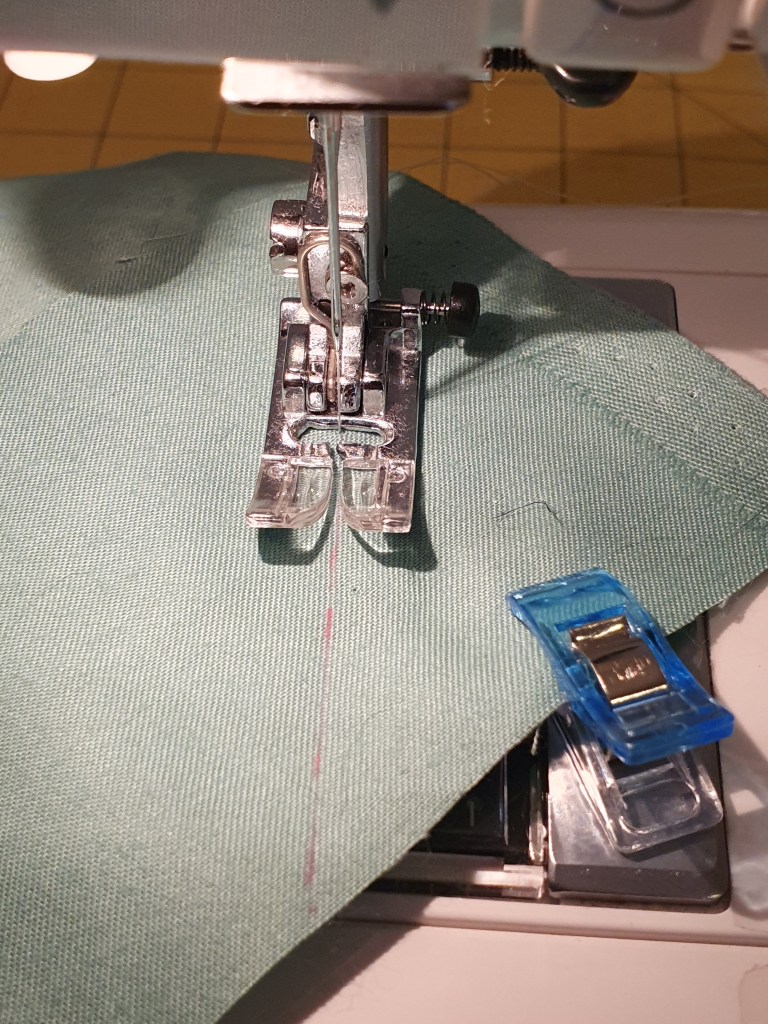
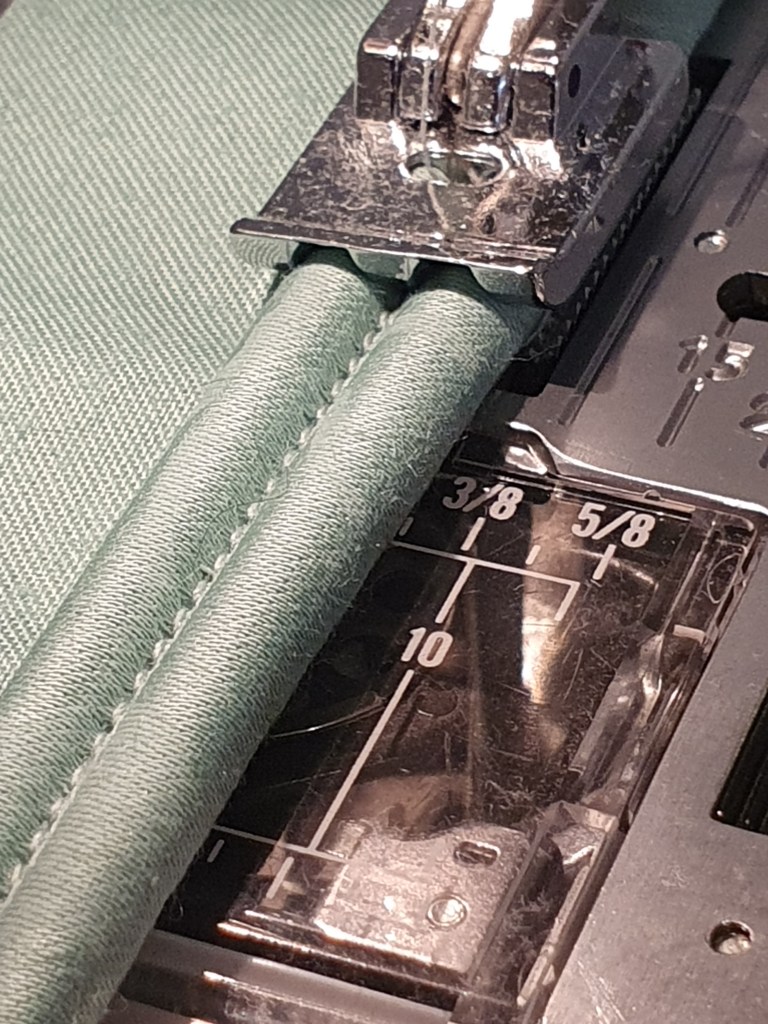
This is used around upholstered surfaces to hide tacks and staples. The alternative is to use a braid, but there’s usually a strip of fabric or two left that can make piping. If neccessary, fabric strips are joined at 90 degrees. That avoids unneccessary bulk in the join. Then a special foot is used, visible in the lower image, to stitch the piping cords into the casing.
Work table
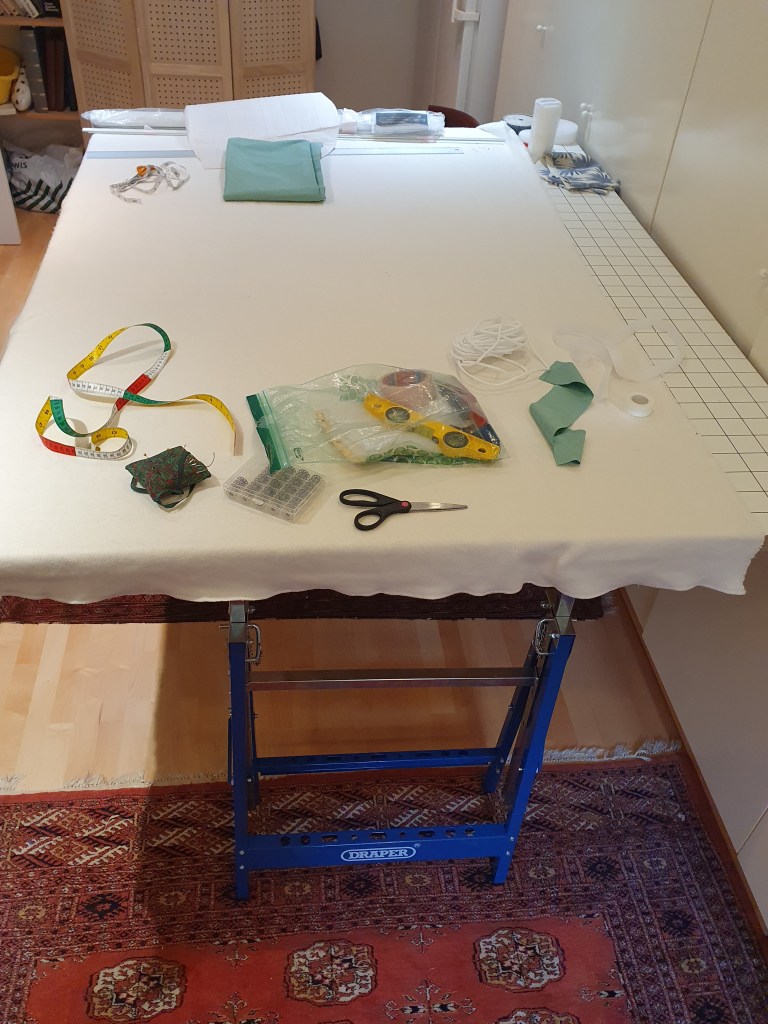
I can extend my work space for making blinds and curtains to a length of up to 3.6m (12′) by connecting a series of table tops. Here it is in action:
Getting colder by the window
Now that autumn is upon is it may be time to reconsider your window arrangements. For drafty or single glazed ones, check that the curtain rail/pole can cope with heavy curtains that are interline. If you’re not sure I can recommend brushed flannelette as lining. It also works well for Roman blinds.
And summer arrived …
19 July 2024 – Can you sleep, take two (see below). If you’re after a good night’s sleep without being woken by an early sunup, go for blinds to fit inside your window recess. The pull cord mechanism that is commonly used means there might be a chink of light at one side to accommodate it. Still, if you line your blinds with blackout lining, a good night’s sleep is quite likely :-).
Linen, cheesecloth and winter curtains
3 June 2024 – It would appear to be sort of summer. Do you still need your lined and interlined curtains, or should they perchance need a dry clean? In the meantime, and in your living room, you might consider changing to summer curtains. Something a bit more transparent such as linen or a light cotton affair. They can be framed smartly with a contrasting border.
Shortening curtain panels
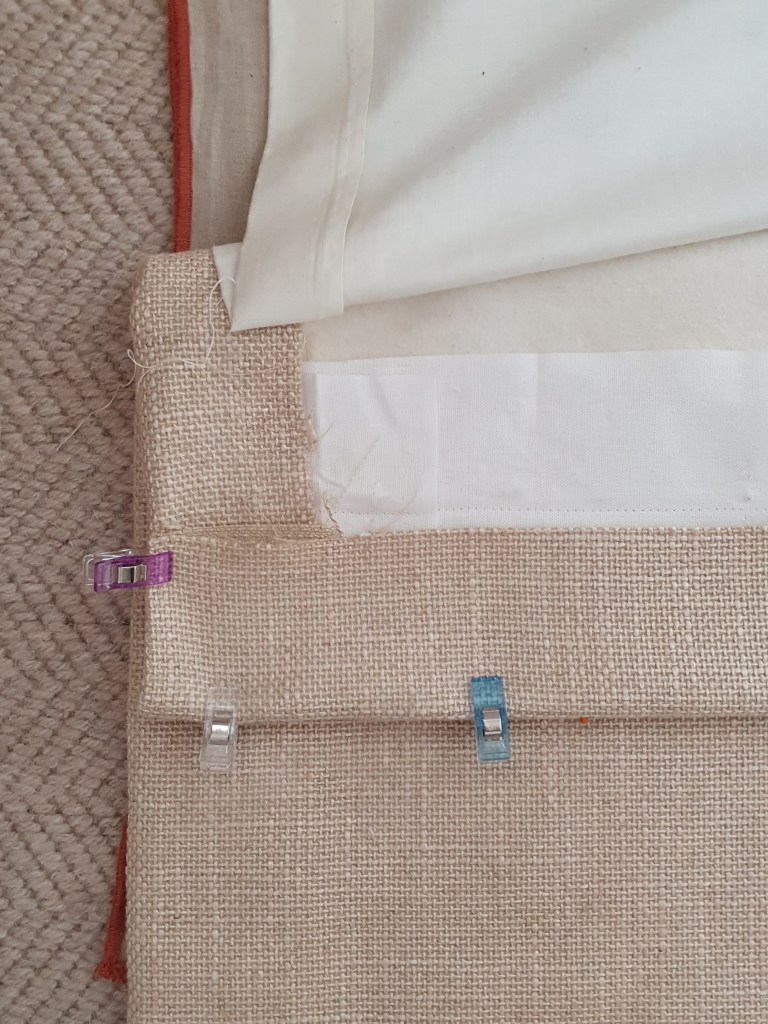
Here you can see how to shorten a curtain panel from the top. This particular panel had a lovely add on panel ‘extension’ at the bottom which my client wanted to keep, so I shortened it from the top. Some hand stitching was involved to replicate the original work exactly. You can see the white buckram stiffening in the top image. Using this gives a lot of flexibility for where the curtain hooks are attached. They can be positioned to either hide or show the curtain rail or the rings they will be attached to.

 The Cycling Curtain Maker